Here is the honest truth about what trips up most new franchise owners — and it is not the food, the staffing, or even the slow opening weeks. It is the supply chain. The endless calls chasing a vendor who shorted your order. The panic when a core ingredient costs 30 percent more than last month because your contract was weak. If you are researching a Restaurant Franchise with Central Supply Chain in Austin or anywhere across TX, this is the question that deserves a real answer before you sign anything.
The Mistakes That Make Restaurant Franchise with Central Supply Chain Ownership Harder Than It Has to Be
Most of these mistakes are invisible during the courtship phase. They surface at 11am on a Saturday when something goes sideways and you realize you are the one who has to fix it.
Assuming the Franchisor Handles Sourcing for You

A lot of franchise agreements point you toward an approved vendor list and stop there. You still negotiate your own pricing, absorb your own risk, and chase your own deliveries. That is not a supply chain — that is a suggestion box. The better move is choosing a brand with true centralized procurement, where pricing, quality specs, and delivery schedules are negotiated at the brand level and flow down to you automatically.
Underestimating How Much a Complex Menu Costs You Operationally
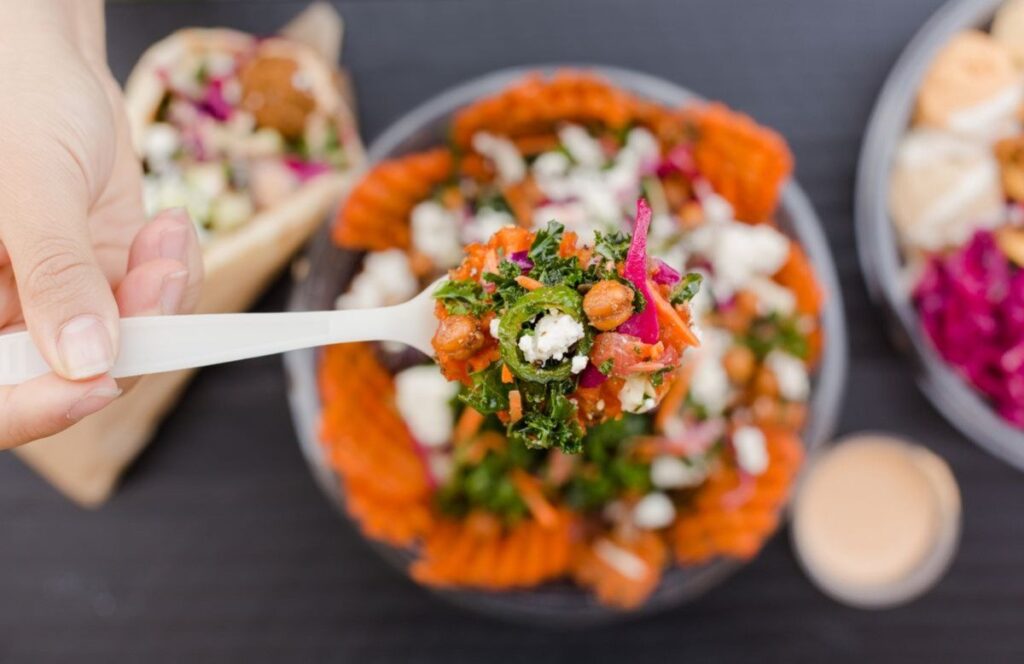
A menu with 60 items sounds like a selling point. In practice, it means 60 ingredient lines to track, reorder, and store — each with its own spoilage window and vendor dependency. A focused, well-engineered menu with shared base ingredients slashes inventory complexity and food waste simultaneously. Read more about why a simple, focused menu is a genuine competitive advantage — it is a strategic choice, not a compromise.
Ignoring Ingredient Consistency Across Locations
If your tahini comes from one regional supplier and another franchisee in a different city uses a different brand, the guest experience drifts. That drift erodes the brand trust that makes the franchise worth owning. Good unit economics in fast casual depend on consistency — consistent food, consistent cost of goods, consistent guest satisfaction.
Signing With a Brand Whose Supply Chain Was Built for Scale, Not for You
Legacy food franchises often built their supply chains for hundreds of locations in dense metro markets. If you are opening in Austin — whether near a major corridor or an emerging suburb — your volume as a single-unit or early multi-unit owner may not earn priority treatment from vendors answering to a corporate buyer in another state. You end up with the standards of a big system and the leverage of a small operator. That gap is where new owners get hurt most.
What Centralized Sourcing Actually Looks Like at Hummus Republic Franchise
At Hummus Republic Franchise, ingredient sourcing is handled at the brand level. Pre-negotiated pricing, vetted suppliers, and delivery specs reach every franchisee the same way — whether you are operating in Austin or in a food court two states over. You do not spend your mornings on the phone with produce distributors. You spend them running your location.
The ingredients that define Mediterranean fast casual — chickpeas, olive oil, fresh herbs, flatbread — source cleanly, store well, and when the brand has relationships with the right distributors, they arrive at predictable cost. Predictable cost of goods is the foundation of every profitable location. According to the International Franchise Association’s guidance on supply chain management, centralized purchasing is one of the most consistent drivers of franchisee profitability across food concepts.
The supply chain is not a back-office detail. It is the system that either frees you to own a business or chains you to a second job you never wanted.
Why This Matters When You Are Building Something Real
If you have spent years watching others take swings and calculating whether your moment is here — this is the part worth sitting with. A franchise that simplifies your supply chain is not just operationally cleaner. It is emotionally lighter. You are not managing a patchwork of vendor relationships while also training staff and learning your market. You are running a business designed to be runnable.
- Centralized purchasing means lower per-unit ingredient costs
- Consistent specs mean you can train staff to a single standard
- Fewer vendor relationships means fewer crisis points
- Predictable food cost supports realistic break-even planning — see how long it realistically takes to break even on a food franchise
- Simpler operations make expanding to a second location achievable
That last point matters more than it sounds. The entrepreneurs who build real wealth through franchising almost always do it through multi-unit growth — and that is only possible when unit one is not consuming every hour you have.
If you are in Austin, TX and ready to ask the real questions — about startup costs, operational support, and what the supply chain looks like on day one — get in touch. This is the kind of conversation that deserves honesty on both sides, and we are ready for it.
Some content on this site is AI-assisted and may not reflect exact current details — please verify with Hummus Republic Franchise at . Learn more.