There’s a version of business ownership that pays the bills. And then there’s a version that means something. If you’ve ever stood behind a counter selling food that has nothing to do with where you came from — or watched someone else do it — you already know the difference. A Business That Represents Your Heritage is a different kind of bet. It’s the one where your culture isn’t a liability to manage around. It’s the whole point.
The Weight of Selling Something You Don’t Believe In
Most franchise models ask you to leave yourself at the door. You follow a playbook built for someone else’s tastes, market to a crowd that doesn’t look like your neighborhood, and spend your days explaining a menu that has no story behind it.
That arrangement works — until it doesn’t. And for people who carry the weight of family sacrifice and community expectation, “until it doesn’t” is a risk that hits differently. We’ve seen people walk away from franchise opportunities that made sense on paper simply because they couldn’t picture themselves standing behind that brand with pride.
That matters more than most financial models account for. Owners who believe in what they’re selling show up differently. They talk about it differently. Their regulars feel it. When the food you’re selling is food you actually grew up eating, the pitch isn’t a pitch — it’s a conversation.
“I need a business I can actually be proud of — something that feels like us.”
What a Business That Represents Your Heritage Actually Unlocks
When the brand you own reflects your culture, a few things shift at once. Your community becomes a natural marketing channel — not because you’re exploiting loyalty, but because the product is genuinely theirs too. Aunts recommend it at gatherings. Coworkers hear about it. The neighborhood feels a kind of local pride you simply cannot manufacture. What happens when one of their own opens a business on the main street is something that no corporate marketing budget can replicate.
Beyond community momentum, there’s the operational reality. At Hummus Republic, franchise ownership with cultural pride comes with a model designed to lower the barriers that trip up first-time owners:
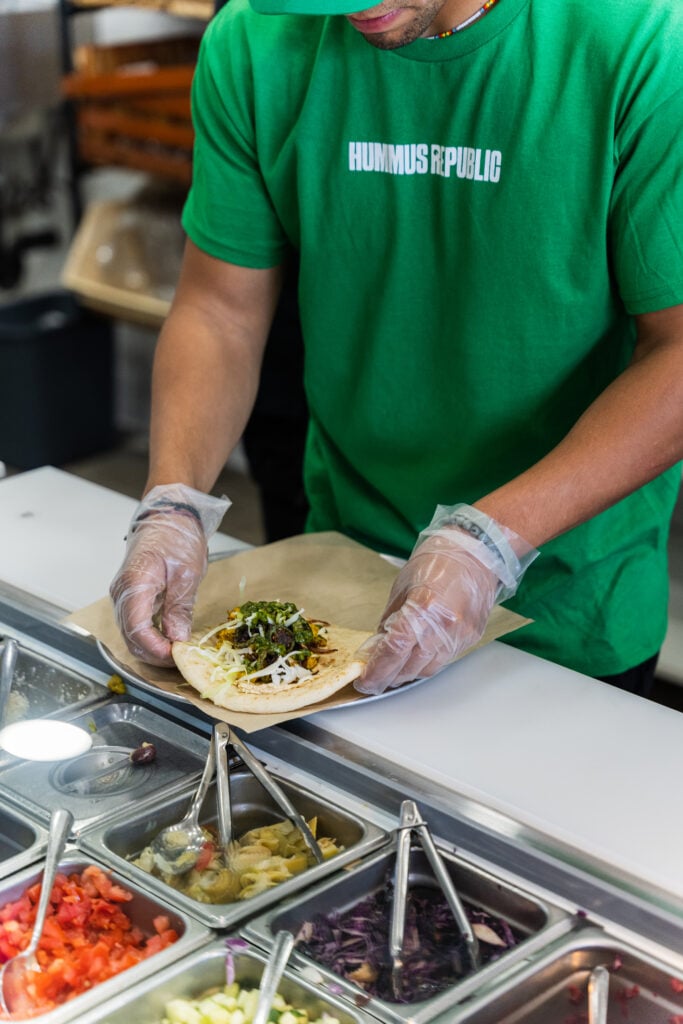
- Streamlined operations — no culinary degree required, no complex prep labor
- A focused menu built around authenticity, not approximation (a short, intentional menu that builds customer trust)
- Startup costs meaningfully lower than legacy fast-casual chains
- Support that doesn’t disappear once the agreement is signed
- A brand story you can claim as your own without any asterisks
This is what a food brand that feels like yours before you even unlock the door looks like in practice.
How the Numbers Compare
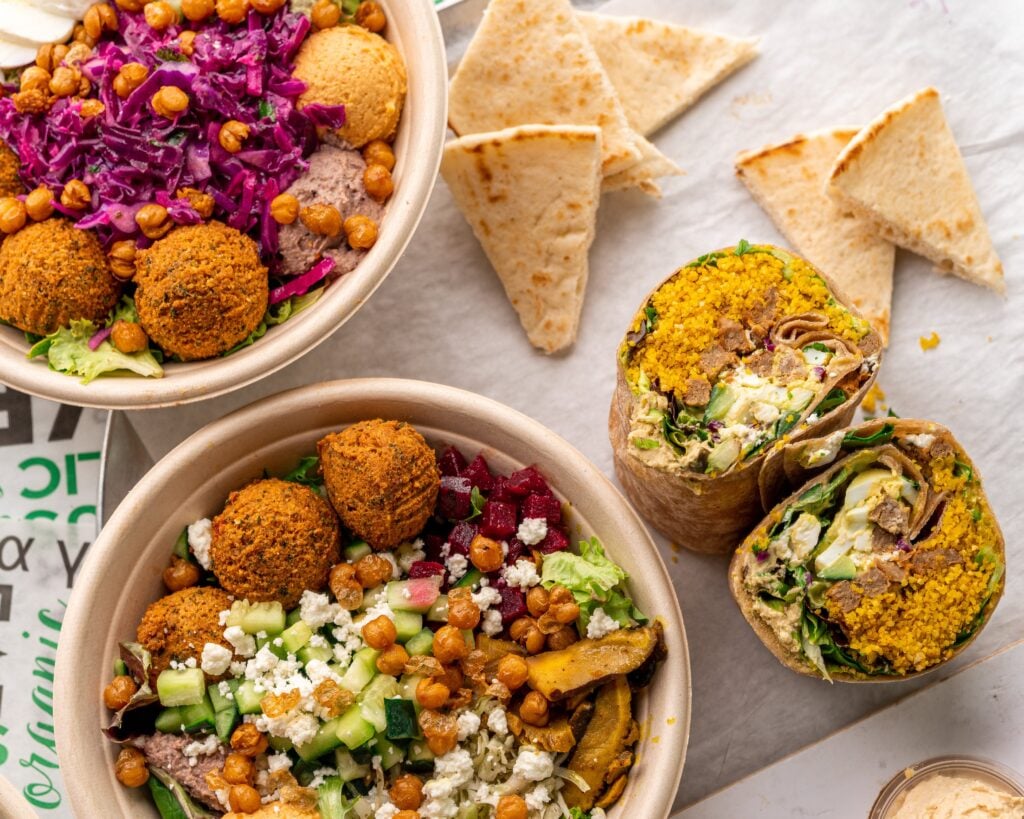
Conviction matters, but conviction still has to survive a spreadsheet. Here’s an honest side-by-side of what the model looks like versus a typical legacy fast-casual franchise:
| Factor | Typical Legacy Franchise | Hummus Republic |
|---|---|---|
| Startup cost range | $400K–$1M+ | Significantly lower barrier |
| Menu complexity | High — extensive SKUs, long training | Focused, streamlined, consistent |
| Cultural fit for owner | Neutral to low | Built in — food you already know |
| Community marketing lift | Requires heavy spend | Organic through cultural alignment |
| Post-signing support | Varies widely | Ongoing operational lifeline |
If you want to dig into how funding actually works for a model like this, how SBA loans work for restaurant franchises is worth reading before your first discovery conversation. And if SBA isn’t your path, there are real alternatives franchise buyers use instead.
Building Something Worth Handing Down
The long game is what this is really about. Not just a paycheck, but an asset — something your kids can step into, learn from, or sell on their own terms one day. Research from the U.S. Small Business Administration consistently shows that franchise ownership offers one of the more structured paths to small business success compared to independent startups, precisely because the systems are already built.
The question isn’t whether the model can work. It’s whether the model is one you can stand behind every single day — when the opening week is slow, when a staff member calls out, when your parents ask what exactly you bought into. A business your children can actually inherit starts with a brand that means something to you right now.
That’s the real case for a business built around your culture. Not nostalgia. Not sentiment. Strategy — backed by community, story, and a product that sells itself to the people who matter most to you.
Ready to get started? Get in touch with Hummus Republic Franchise today — reach out online to request a quote.
Some content on this site is AI-assisted and may not reflect exact current details — please verify with Hummus Republic Franchise at . Learn more.