
Here’s the straight answer: to qualify financially for most food franchises in the United States, you typically need between $80,000 and $250,000 in liquid assets and a net worth of $150,000–$500,000, depending on the brand. Those numbers sound intimidating — until you see how wide the range really is. Understanding How to Qualify Financially for a Franchise is less about hitting a magic number and more about choosing the right system to begin with. If you’ve been building savings steadily and you’re based in Kansas City or a nearby metro, you may be closer than you think.
What How to Qualify Financially for a Franchise Actually Looks Like in Practice
Franchisors look at four metrics before anything else. None of them are designed to scare you off — they protect both sides of the agreement.
- Liquid capital — cash or near-cash you can access without selling your home. This covers the franchise fee, initial buildout, and early operating costs before revenue stabilizes.
- Net worth — everything you own minus everything you owe. It tells the franchisor you have a cushion if the first few months run lean.
- Credit score — most SBA lenders want 680 or higher. A strong score opens access to SBA loan financing for restaurant franchises, which can meaningfully reduce how much cash you need on day one.
- Income history — two years of stable tax returns. A steady W-2 career actually helps here; it signals reliability to lenders and franchisors alike.
The best franchise for a modest budget isn’t the cheapest one — it’s the one whose economics actually work at a lower price point, so you’re not just surviving year one, you’re building toward a second location.
How to Open a Restaurant Without Huge Capital

Legacy fast-food franchises often demand $500,000 or more in total investment — a figure that shuts out most first-time owners before the conversation even starts. The smarter move is matching your budget to a concept built for a leaner model.
- Choose a focused menu. Fewer items mean simpler kitchens, less waste, lower labor, and faster training. We’ve covered exactly why a focused menu is a competitive edge for franchise owners — it’s not a compromise, it’s a structural advantage.
- Look at total investment, not just the franchise fee. Buildout, equipment, working capital, and pre-opening marketing are the real line items. Read the Franchise Disclosure Document before you compare anything.
- Explore every funding lane. Personal savings, SBA 7(a) loans, ROBS (rollover for business startups), and family partnerships are all legitimate paths. None require you to bet everything at once.
- Think long-term. Franchise ownership builds net worth through equity, brand value, and transferability in ways a salary simply never will.
Fast-casual Mediterranean is one of the strongest categories right now precisely because the operational model is streamlined: no tableside service, no elaborate prep requiring a culinary degree, smaller footprints in the 1,200–1,800 sq ft range. Think high-traffic corridors in Kansas City — far less buildout cost than a full-service restaurant, and no prior restaurant experience required. Catering and takeout channels add meaningful revenue without requiring more space or staff.
Ready to See the Real Numbers?

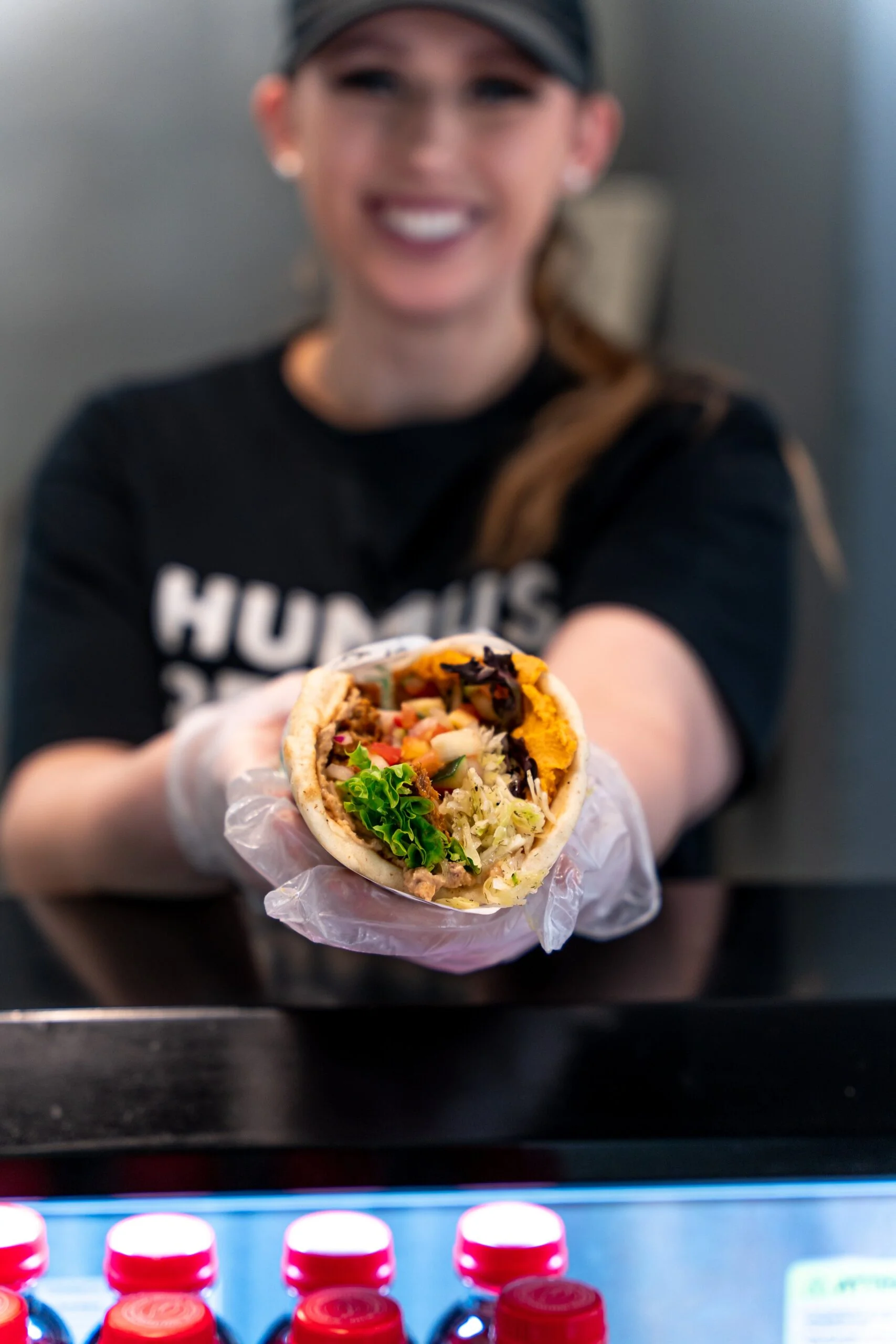
At Hummus Republic Franchise, we built the model around exactly this reality — real Mediterranean food, streamlined operations, and a startup investment designed for owners who are serious but not sitting on half a million dollars in cash. We answer the hard financial questions directly, not after you’ve signed anything. get in touch or request franchise information below — no pressure, just real data.
Some content on this site is AI-assisted and may not reflect exact current details — please verify with Hummus Republic Franchise at . Learn more.