Picture this: it’s a Tuesday morning in Philadelphia, PA, coffee in hand, kids already at school — and your Food Franchise with Low Employee Count is open, running, and you are not standing behind the counter. That is not a fantasy. That is what a well-structured ownership model actually looks like when the operational design serves the owner, not consumes them. If you have watched family members grind themselves down managing fifteen employees across three shifts, you already know the difference between owning a business and being owned by one.
Why Employee Count Is the Wrong Number to Obsess Over
Most people shopping for a franchise fixate on startup cost — and yes, that matters. But the number that quietly controls your quality of life is your daily crew size. Legacy burger chains routinely run 18–25 employees per location. They need that many because their menus are enormous, prep is complex, and their footprint is large.
A focused Mediterranean concept is structurally different. A short, intentional menu means fewer moving parts, tighter ingredient rotation, and dramatically less training time per hire. When a new team member can be genuinely confident on the floor inside a week rather than a month, the staffing math changes completely — fewer people, fewer scheduling headaches, fewer “I quit” texts at 6 a.m.
Notice how different that feels from the traditional franchise pitch, where the “support” they promise is basically a thick binder and a hotline no one answers.
The Real Architecture of a Food Franchise with Low Employee Count That Runs Without You

In Philadelphia, PA — where neighborhoods like South Philly and Fishtown run on community loyalty and word of mouth — the owners who thrive long-term are not the ones working every shift. They built a system and then trusted it. That is the goal Hummus Republic Franchise designs toward.
A manager-run location model does not mean you disappear — it means your time goes toward decisions that actually grow your business, not whether someone restocked the napkin holders. The practical pieces that make this work:
- Lean crew size by design — kitchen flow engineered for 4–6 team members per shift, not a small army
- Centralized supply chain — fewer vendor calls, fewer ordering decisions, fewer supplier crises ruining your week
- Systemized training — new hires learn a real process, not tribal knowledge passed unevenly between shifts
- One trusted floor manager — that key hire who handles daily operations so you work on the business, not in it
“The best franchise for a first-time owner isn’t the most popular one — it’s the one where the system does the heavy lifting before you even walk in the door.”
For the practical playbook on finding that key person, read our guide on hiring a manager who runs the floor so you don’t have to.
Menu Simplicity Is the Foundation of Owner Flexibility

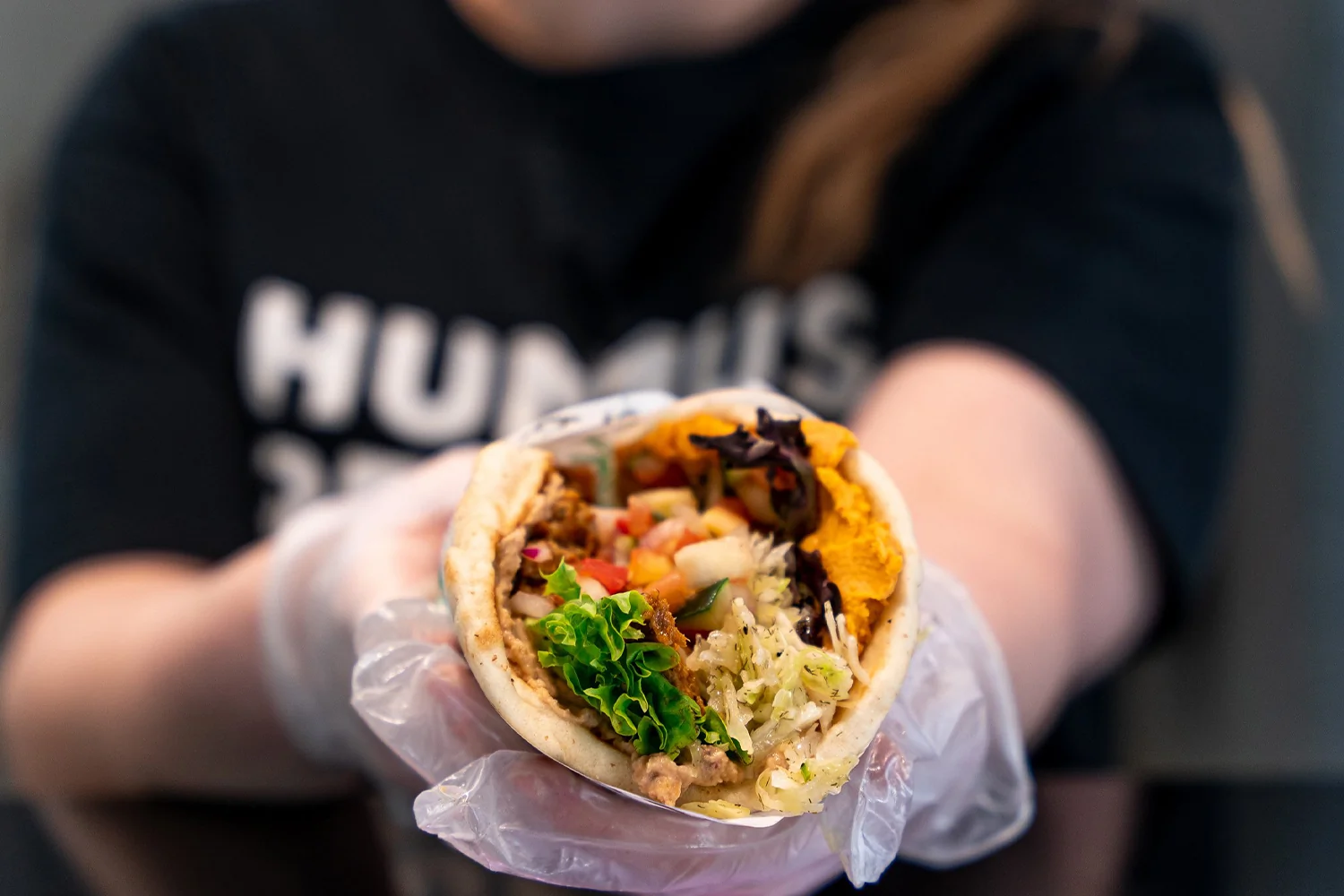
Imagine walking into your location near Reading Terminal Market on a Thursday afternoon — the lunch rush is winding down, the team has everything under control, and the food coming out is the same food you grew up eating at someone’s table. Hummus, falafel, shawarma, fresh tabbouleh. When the food you are selling is food you actually grew up eating, you are building something you can describe to your parents with pride.
And because the menu is focused, the kitchen stays sane. No 80-item prep list, no fifteen proteins with individual cooking protocols. A focused menu cuts waste, lowers cost, and keeps your kitchen manageable — so your team executes it consistently without you watching every plate. For owner-operators in Philadelphia, PA juggling a day job, a family, or both, that consistency is everything.
What This Flexibility Really Costs — and What It Saves
Staffing correctly is not just about hiring fewer people — it is about spending less time and money on the hiring cycle. High turnover is the silent tax on traditional restaurant franchises. When your menu is simple and your culture is strong, people stay. When people stay, you stop paying that tax.
Startup costs for a Mediterranean fast casual concept run meaningfully lower than comparable brands. For an honest breakdown, read what it actually costs to open a fast casual restaurant before you talk to anyone. Go in informed — that is how you protect what your family worked for. The International Franchise Association’s owner-operator resources are also worth bookmarking for independent due diligence.
Ready to see if Philadelphia, PA is the right market for you? get in touch and start your discovery conversation today.
Some content on this site is AI-assisted and may not reflect exact current details — please verify with Hummus Republic Franchise at . Learn more.