
I’ve talked to a lot of people who spent months researching a franchise opportunity — reading every disclosure document, running spreadsheets at midnight, calling their cousin who opened a location in Houston — and still got blindsided after they signed. Not by the royalty rate or the build-out cost. By territory. Specifically, by what their territory agreement actually said versus what they thought it said. If you’re serious about How to Negotiate a Franchise Territory, this is the conversation you need to have before the ink dries.
What a “Protected Territory” Actually Means (and Doesn’t)
Most franchise agreements include a defined territory — a radius, a zip code cluster, a trade area boundary. That sounds reassuring. The problem is that “protected” doesn’t always mean what buyers assume it means. Protection typically covers only company-owned locations of the same brand. It usually does not cover:
- Online or delivery-only channels the franchisor operates directly
- Non-traditional venues — airports, stadiums, food halls, ghost kitchens
- A sister brand the parent company launches next year
- A neighboring franchisee whose delivery radius bleeds into yours
Read our breakdown of franchise territory rights — what you own, what you don’t, and why it matters for the full picture. The short version: get every carve-out in writing, or assume it doesn’t exist.
The Real Cost of Encroachment

Encroachment is when another location — franchisee or corporate — pulls customers from your trade area. It doesn’t have to be a physical store two blocks away. A well-optimized delivery app listing from the next zip code does the same damage without triggering any contract clause. In fast casual QSR franchise comparison research, encroachment consistently ranks among the top three sources of franchisee litigation. That’s not a footnote — that’s a pattern.
The territory clause you negotiate before you sign is worth more than any marketing fund the franchisor promises after.
When you’re thinking about urban markets where Mediterranean fast casual is still wide open, territory scarcity becomes a real variable. The best-positioned markets go fast. And once a market is awarded, the conversation about boundaries becomes much harder.
How to Negotiate a Franchise Territory — A Practical Framework

Knowing How to Negotiate a Franchise Territory comes down to five concrete moves. None of them require a law degree. All of them require attention.
| What to Ask For | Why It Matters | Red Flag if Refused |
|---|---|---|
| Defined boundary map (zip codes or radius) | Makes encroachment legally provable | Vague “area” language hides loopholes |
| Delivery channel exclusivity | Protects digital-era revenue | Online carve-outs erase physical protection |
| Non-traditional venue exclusions spelled out | No surprise ghost kitchen next door | Silence here always favors the franchisor |
| Right of first refusal on adjacent territory | Lets you scale on your own terms | Expansion gets auctioned to strangers |
| Performance thresholds that are realistic | Protects you from arbitrary territory loss | Unreachable sales targets = built-in exit clause for them |
One thing worth knowing: what to look for in a franchise agreement goes beyond territory. The FTC’s Consumer’s Guide to Buying a Franchise is dry reading but genuinely useful — particularly the sections on Item 12 (territory) and Item 19 (financial performance representations). Cross-reference what any franchisor tells you verbally against what those items actually say.
How to Secure Territory Rights in a Franchise — The Timing Question
Here’s something people don’t talk about enough: how to secure territory rights in a franchise is partly a timing game. Strong franchisors with real demand award territories to qualified candidates on a first-come basis. Waiting six more months to feel “completely ready” often means the zone you wanted is gone. That’s not pressure — that’s just how territorial scarcity works in growing brands.
It’s also worth thinking about what you’re actually building toward. Building something your children can actually inherit starts with owning a territory that is legally defensible and commercially viable — not just a dot on a map that a future neighbor can quietly absorb.
What We Do Differently at Hummus Republic Franchise
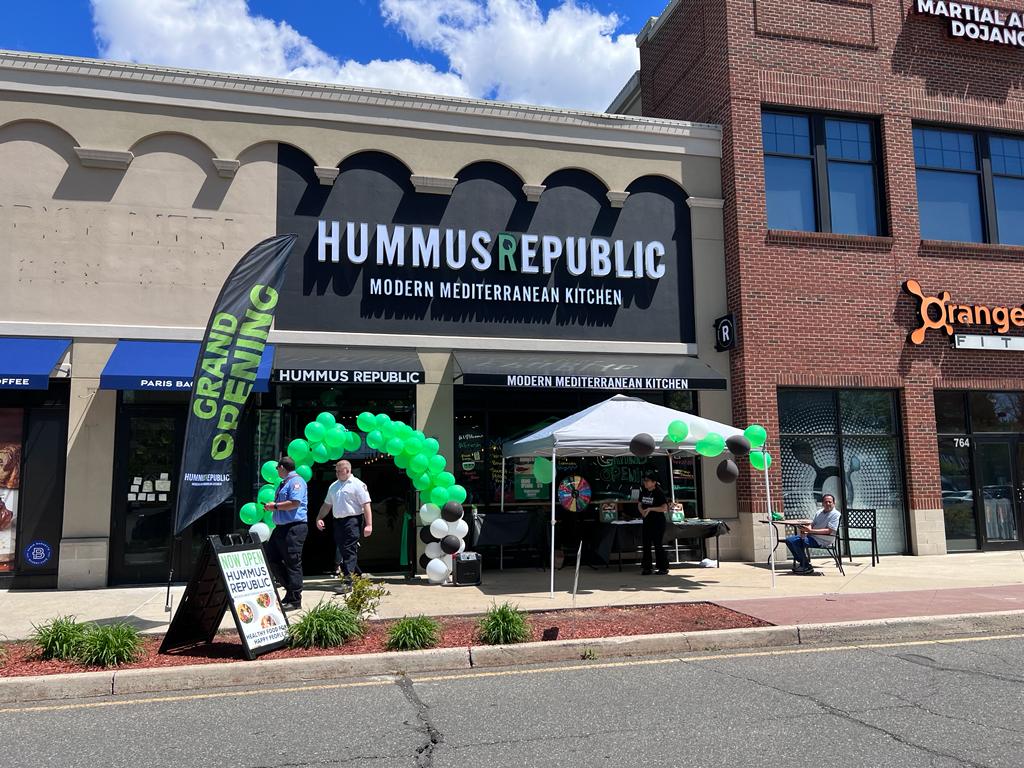
At Hummus Republic Franchise, we’ve built our franchise model around clarity — not fine print. Territory boundaries are defined by zip code clusters with explicit delivery channel language included. We’re not interested in awarding territories that set owners up for internal competition. Our growth strategy depends on franchisees who are profitable, proud, and growing — and that only happens when the zone you own actually belongs to you.
We’re also honest that the food itself carries weight that most QSR brands can’t replicate. When the food you’re selling is food you actually grew up eating, you’re not just running a business — you’re building something with real roots in the community you already know. That’s a competitive advantage that no territory overlap can erase.
If you’re ready to ask the hard questions — about zones, about boundaries, about what the agreement actually guarantees — we’re ready to answer them. No deflection. No corporate runaround. Just an honest conversation about whether there’s a market where you and Hummus Republic Franchise can build something real together.
Some content on this site is AI-assisted and may not reflect exact current details — please verify with Hummus Republic Franchise at (818) -. Learn more.